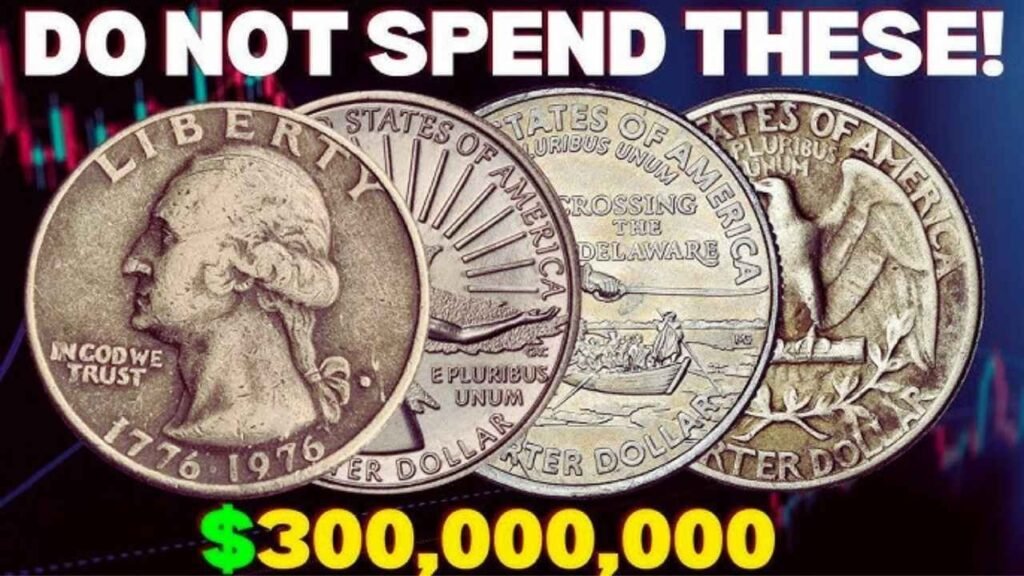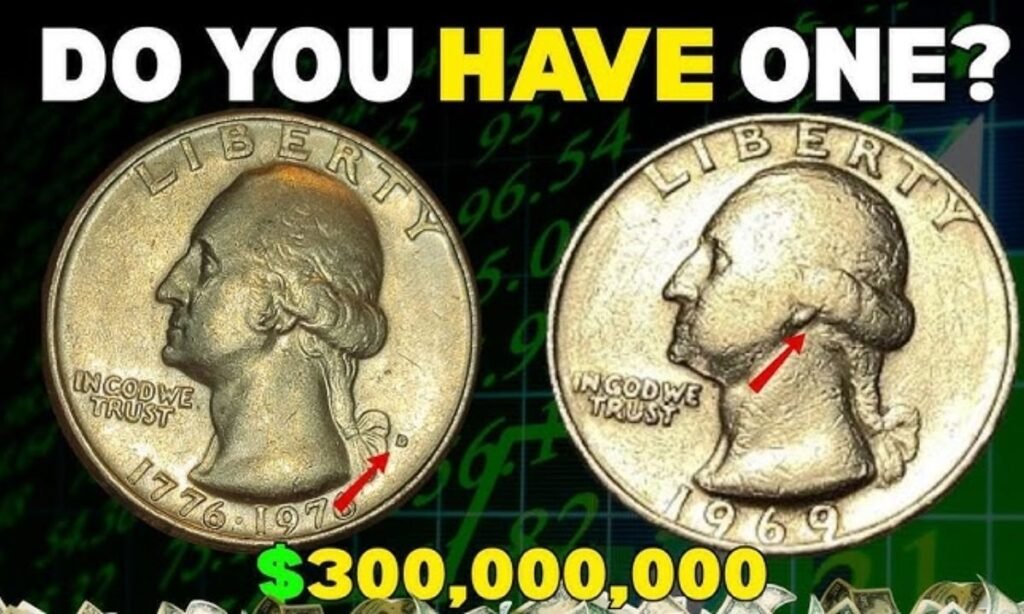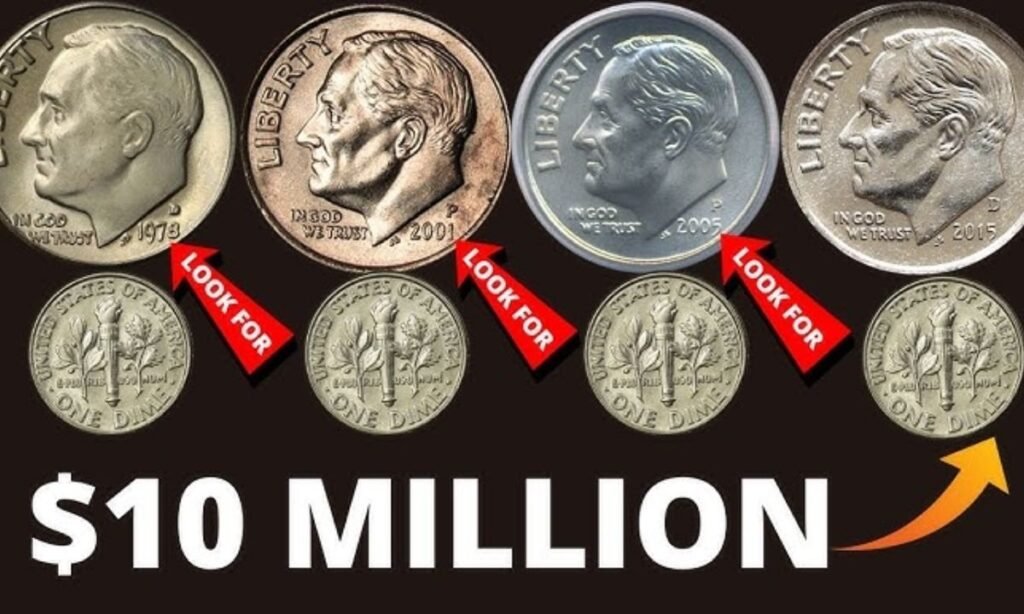
Coins are one of the few items on Earth where small size can still mean giant value. A dime is tiny, a quarter is common, and both are easy to ignore. But a handful of Roosevelt dimes and commemorative quarters are different. They are rare, in demand, and in some cases worth more than a million dollars. Some got famous because of mint mistakes, others because they were made in silver or produced in very low numbers. The best part? Many of these coins have been found in circulation, meaning one could already be sitting in your drawer, coin jar, or old proof set.
These coins matter because rarity and collector excitement work together. When a coin has a strong story or a major error, bidding becomes emotional, fast, and aggressive. For example, some rare quarters have names collectors love, like “Spitting Horse” or “Extra Leaf.” Those nicknames make the coins more memorable and increase demand. Pre-1965 dimes are also popular because they were struck in 90% silver, giving them metal value even before collector premiums kick in. The key is spotting details most people overlook, like missing mint marks or doubled designs.
Most Valuable Roosevelt Dimes
1. 1949-S Roosevelt Dime
The 1949-S dime is one of the lowest-mintage circulation dimes in the Roosevelt series. That alone makes it collectible, but condition is where the real value jump happens. If you ever spot one that still looks sharp and shiny, don’t assume it’s just a nice old coin. It could be uncirculated, and uncirculated 1949-S dimes have reached six-figure sale territory. A coin like this becomes expensive because early San Francisco dimes weren’t saved in large numbers by the public, especially not in perfect condition.
2. 1968-S Proof Dime with Missing “S”
Proof coins are not supposed to have mistakes. They are struck slowly, polished, and made for collectors, not circulation. But the 1968 proof dime had a tiny batch that left the mint without the “S” mark, even though the coins were made in San Francisco. That missing letter turned an ordinary proof dime into one of the most wanted modern U.S. coin errors ever. If you own old proof sets, always check mint marks under a bright light. The surface should look mirror-like, and the missing “S” is the giveaway.
- The coin should look like a collector proof
- The front should show no S mint mark at all
3. 1970 Proof Dime Doubled Die
Doubled die errors happen when the design is stamped twice at slightly different angles. On the 1970 proof dime, the doubling can show up in the year or the word LIBERTY. The doubling is usually small, but it doesn’t need to be huge to create value. Even minor doubling on proof coins can make collectors bid higher, because proof errors are dramatically harder to find than circulation errors.
4. 1982 Philadelphia “No Mint Mark” Error
Starting in 1980, Philadelphia began adding the “P” mint mark to dimes. But in 1982, some coins escaped without any mark. No “P,” no “D,” no “S,” nothing. It’s an easy detail to check, but also an easy detail to miss, which is exactly why these coins became valuable. A coin with no mint mark from this year, especially in uncirculated condition, has become a major target for error collectors who specialize in modern coins.
Most Valuable Commemorative Quarters
1. 1976-S Silver Bicentennial Quarter
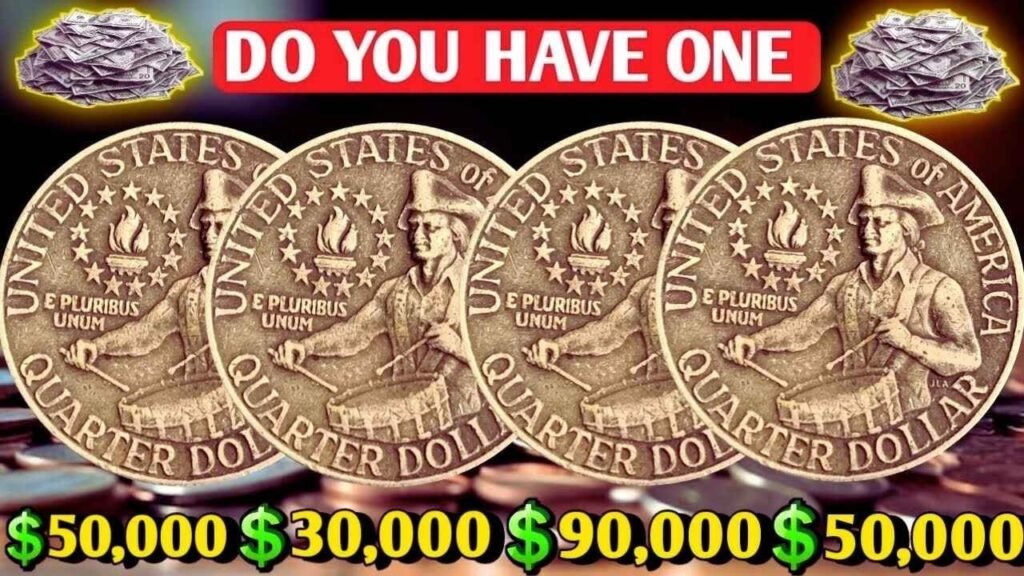
The Bicentennial quarter is one of the most recognized U.S. coins because of its colonial drummer design. Most were made in copper-nickel for circulation, but a portion were struck in 40% silver for collector sets. The silver version is heavier, shinier, and doesn’t show a copper stripe on the edge. If you ever find one that has an “S” on the front and a solid silver edge, you might be holding the collector version without even realizing it.
- The edge should be one solid silver color
- No copper line means it came from a silver collector set
2. 1999 Delaware “Spitting Horse”
This error isn’t caused by doubling or missing letters. It’s a die crack, a thin line that extends from the horse’s mouth. It looks like the horse is spitting, which is how the coin got its name. The defect is small, but the fame is huge. Collectors care about coins with stories, and this one has a story almost every coin hunter knows. Bold die cracks on this coin sell for more than light or faint ones, especially when the rest of the coin is clean.
3. 2004 Wisconsin Extra Leaf
The 2004 Wisconsin quarter has a corn design on the back. On a small number of coins, the mint accidentally added an extra leaf to the corn husk. There are two versions: one where the leaf sits high, and one where it sits low. You don’t need fancy equipment to spot this error, which helped make it one of the most popular modern quarter varieties ever. These coins climbed in value because millions of people check quarters, but only a tiny number actually find this exact defect.
4. 2019-W and 2020-W Limited Circulation Quarters
For just two years, West Point released quarters into circulation with a “W” mint mark. These weren’t errors. They were special releases, but the low supply made collectors treat them like rarities anyway. When millions of people hunt for a coin, but only 2 million exist per design, the market gets competitive fast. Coins that look clean with fewer scratches have already sold for strong premiums, and many collectors believe they will keep rising in value over time.
How to Check Coins Safely
Many new collectors make one big mistake: cleaning coins. That can ruin value faster than almost anything else. If a coin is truly rare, its surface should stay exactly as it is. Even if it looks dirty or toned, that’s part of its originality, and collectors want original coins more than shiny damaged ones. Hold the coin gently by the edges, keep it in a soft holder if possible, and avoid polishing or rubbing the surface.
Why Some Coins Reach Millionaire Prices
A coin becomes worth a million when rarity, demand, and condition all meet at the same point. Most coins have only one of these factors, maybe two. But the million-dollar coins are the ones that check every box at once. Error coins add personality, silver coins add metal value, and low-mintage coins add scarcity. But condition is still the biggest multiplier. A rare coin in average shape might sell for thousands. The same coin in flawless shape could sell for hundreds of thousands or more. That gap is why some collectors spend years searching for just one perfect example.
Roosevelt dimes and commemorative quarters have produced some of the biggest surprises in American coin history. Many are still out there, waiting to be spotted by someone who knows what to look for. You don’t need to own a huge coin collection to get lucky. Sometimes you only need one coin, one small detail, and one moment under the light that changes everything